- Try all three games free. Redrock Study, Sea Wolf and Sustainable Futures Lab each have a fixed free scenario you can replay. The Lab has one in each format: 20 and 30 minutes.
- See your result and partial feedback free. Full access unlocks the detailed report, PDF downloads and more scenarios.
- Review one mistake before replaying. Identify the data you needed, check the units and explain your calculation.
What can you do with free McKinsey Solve practice?
Choose a game and start playing in your browser. You can try all three games and replay each free scenario as often as you like. No credit card is needed.
Try the three games for free →
Each game gives you a different job:
- Redrock Study. Investigate a problem using a short brief, charts and tables. You choose the figures you need, perform calculations and use your results to complete a report.
- The Sea Wolf (Ocean Cleanup). Choose microbes to treat a polluted site. Each microbe has its own characteristics. You need to find a combination that meets the site’s requirements.
- Sustainable Futures Lab. Read about a project, consider what the people involved know and decide what the team should do next. For example, when two sources disagree, which piece of information would you check before making a decision?
How to get started with all three games
Play one free scenario in each game, in any order. Use these first three runs to learn the controls, see what each game asks you to do and get a feel for the time available.
After each run, jot down one task that took longer than you expected. Once you have tried all three games, replay the one you found hardest and focus on that task.
What do you get with full access?
Full access includes additional Redrock scenarios, new Sea Wolf combinations and more scenarios in both Lab formats. After each game, the detailed report explains your results so you can decide what to practise next. A single payment covers 12 months.
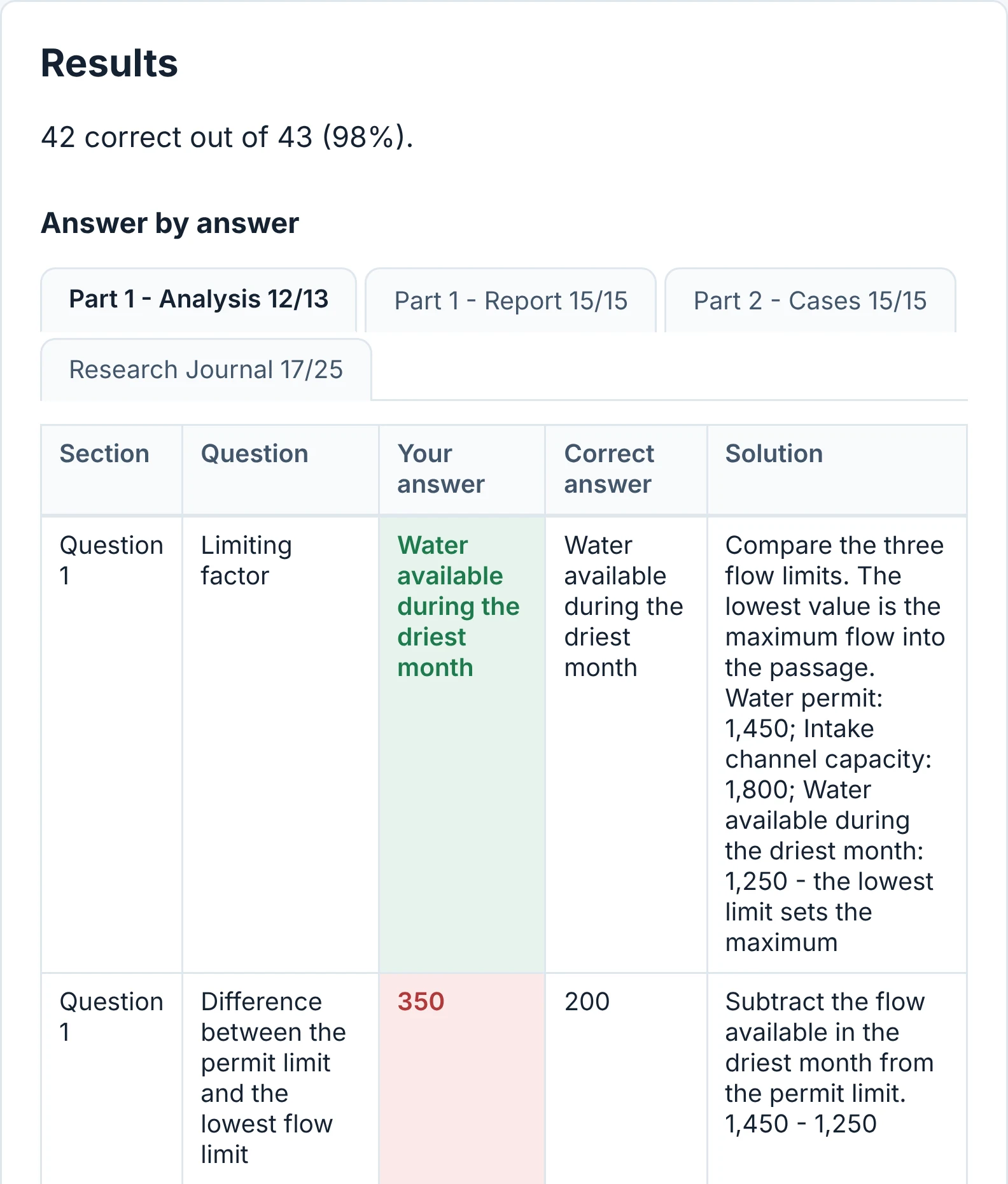
You also get a detailed report after each run. In Redrock, you can compare your answer with the correct one and follow the worked solution. That helps you decide what to practice next: choosing the right data, setting up the calculation or interpreting the result.